End of an Era
Positivity
Chapter 126: Positivity
Nearing the end of grade 12 in highschool, my AP biology teacher decided to talk to our class about something. He asked the class a simple question.
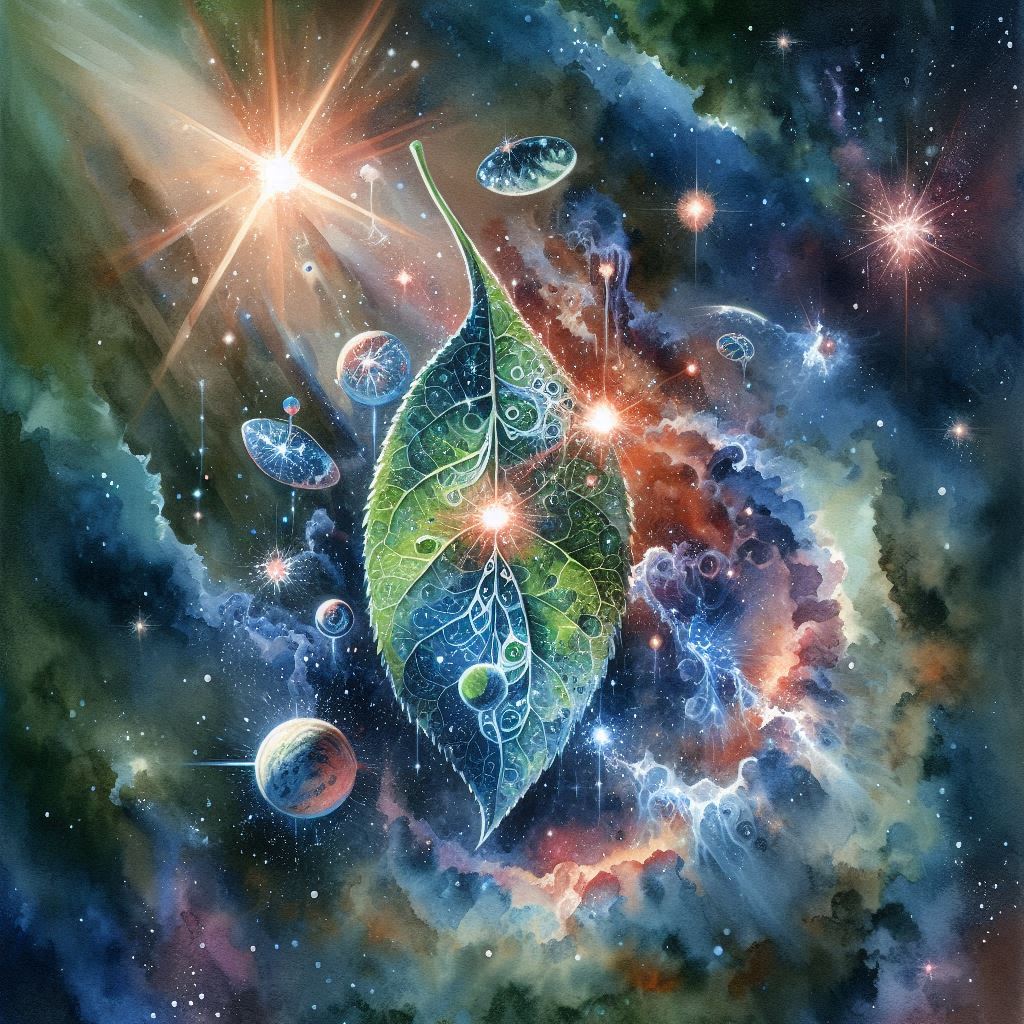
“Does knowing about photosynthesis take away the beauty you see in trees?”
He asked our class this question while we were in the middle of exam season and I think that’s why we all said:
“Beauty requires an unknown quality. The mystery goes away with understanding.”
A good answer but in reality, in truth the real answer was more like:
“Photosynthesis is not beautiful when you are forced to learn it to pass the exams. I’d rather be outside looking at a tree.”
Like I said, we were in the middle of exam season. Our biology teacher, understandably, was rather disappointed with our answer. Unwavering in his message, he then continued to give us a piece of insight by telling us:
“Learning and understanding photosynthesis makes the leaf more beautiful, not less.”
Most of my class thought he was preaching at this point and chalked it up to him just joking around. For me, I found this thought rather perplexing. The reason was that it made a parallel with a similar question I was thinking about at the time relating to classical music. If you’ve read about my story through the high school bits you’ll know that if I compare something to classical music at that time, it was a big deal.
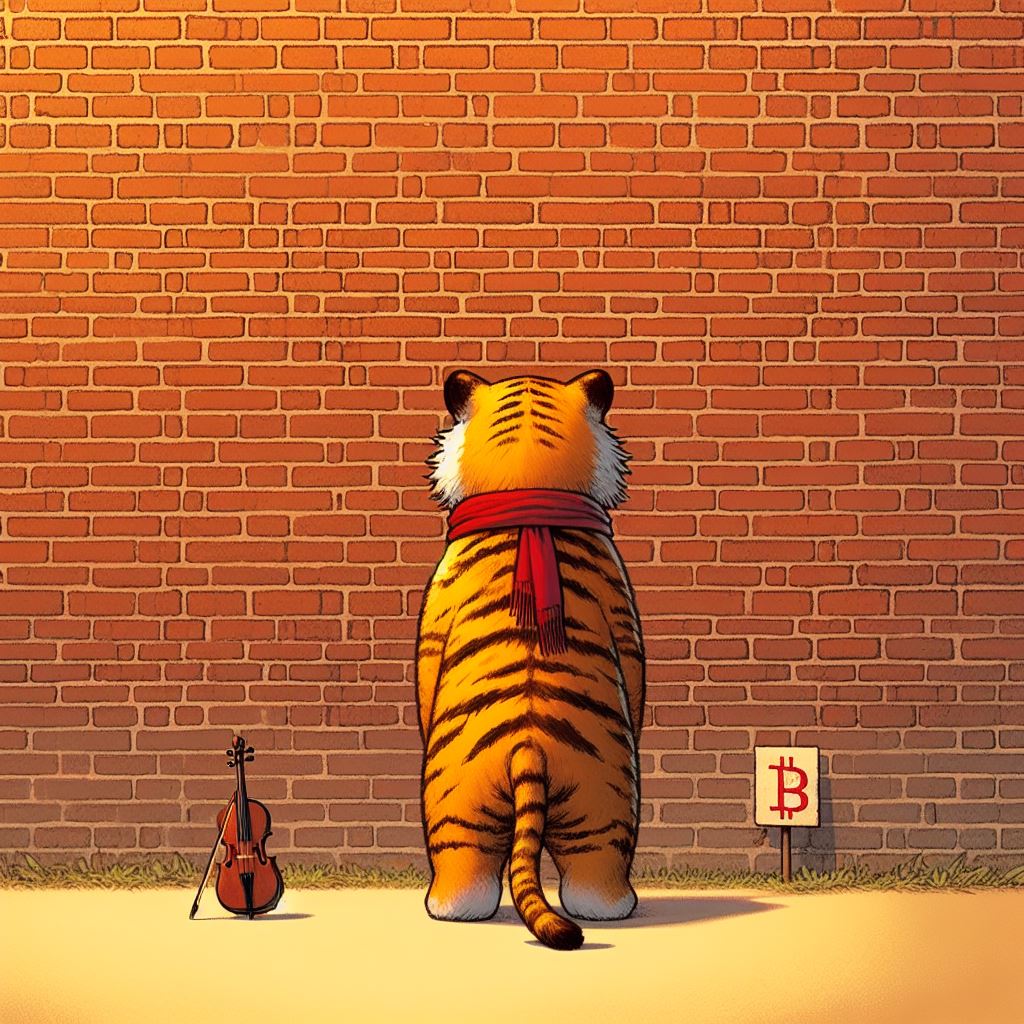
Grade 12 was a period when I thought that my time with classical music was coming to an end. I genuinely thought classical music was about to leave my life. Seeing its impending departure, I started to think more and more about classical music and whether or not I wanted to sacrifice moving forward to keep it in my life. This overthinking brought up one particularly difficult question.
“What’s the point of classical music?”
It’s a straightforward question. Why play a piece of music that has already been played trillions of times by trillions of artists in trillions of ways? It’s all the same notes and played in the same order. Some pieces are hundreds of years old and have literally graced every venue possible. Why are we still playing the same music? Aren’t people tired of listening to the same thing again and again? Why doesn’t it turn over like the pop music of the week? Why do people keep on learning, playing and listening to the same melodies?
I did eventually find an answer though I wasn’t initially happy with it. It was sort of along the lines of “learning photosynthesis makes it more beautiful not less” but elaborated just a bit more. I would put it this way: In classical music, learning and playing of music contributes to a deeper understanding of it which allows you to appreciate it more.
Appreciation comes from hardship, effort and time. It comes when you understand how a leaf does photosynthesis after reviewing your notes again and again and again. It happens when you realize that a tree is more than just something that looks pretty but also something that is critical to the biosphere. Only then, do we know more and appreciate it all more.
This sounds plausible enough doesn’t it? Well…for me, when I first heard it, it wasn’t. I was very young and didn’t care much about all of that. During this period of my life, I was swamped with extracurriculars and loved doing everything. I was swimming, I was breakdancing, I was singing and I was playing cello. I did all of these things because I hoped they would all open windows for me in the future. Sure, it was fun, but I never thought of it that way. I was looking forwards and outwards, learning for the sake of learning and understanding it all as the reward was too introspective for me. Learning because “I” will care more for it? Why do I care about what I’ll feel about it? What I really want to know is where can classical music take me? Where can I go with this hobby of mine? What can it give me? It never really even occurred to me to ask myself, do I really want to do this anymore? What has it already given me? Or even, am I liking myself more than before I knew how to do any of this?
Even at the end of grade 12, I was thinking about why I should keep doing music instead of if I wanted to. It had always been more of a conversation with myself about abandoning habits established by my mom a long time ago than it was about artistic freedom or the love of the art up until then. It wasn’t until later on in life did I realize how important your own experiences of life were.
Young people have only potential. Not assets, nor a proper understanding of the world. They’re greedy for success and think more about to how to impress others to get there. Their own feelings are less important because they haven’t been fully established yet. Only when you age did I see that you should also look within as much as you look outwards. With time, I learned to really ask myself, do I like these things? Or are they a means to an end? Can I live without these or will I have a worse life having missed out on pursuing some of these hobbies.
It would only be nearing the end of my undergraduate career would I sort of understand what appreciation meant. By this time in my life, I had done classical music because my mom forced me and have also done it because I loved classical music. I loved the sounds of it and the textures of it. I also loved talking about it with a class of other music geeks who just had a love of the art. Years of ear training meant I could also pick up on small motifs in the bassline or hidden in the harmonies and I found that finding those with my ears when listening to a piece in motion was joyous. I liked doing all of this and I also finally appreciated that I enjoyed doing all of it. None of which would have happened if I stopped classical music years ago.
Furthermore, being in a science program where I was intentionally doing courses as a means to an end (to get into professional school), I truly understood what liking something means and also what appreciating something meant. I suppose one of the best ways to appreciate something is to put it up against something you don’t appreciate as much in life.
The joy I had from just knowing what I know was so positive in my life that I didn’t care that my cello career essentially went nowhere nor opened any doors for me in particular. I liked the version of me in the present who can listen to classical music differently than when I was in high school and that was enough. That is what appreciation is.
In truth, it doesn’t really matter what it was. It could have been classical music or photosynthesis. It could have been anything. Anything that you took seriously and really gave a lot of thought into that gave you more insight can do it. It’s only with the understanding of something, that we can also understand ourselves better. Appreciation is what you get out of it and not what others gain.
As I was about to take my first steps into the workforce with my final departure from academia, I pictured myself marching towards it proudly with all the scars I accumulated. All the failures and all the successes. All the ups and all the downs. They all led me to the experience I got and my own personal path through it all. It is only with all these hardships, whether positives or negatives, that I can truly say that I’ve carved the path forwards.
Am I appreciative of all those experiences? Not at all, some experiences I could have definitely gone without. However, having survived all of that, am I happy to have ended up on the other side despite all of it? Absolutely. All the stupid decisions, poor choices, excuses and excuses and excuses. All of those things had made me feel the weight of the profession I was now entering. While I am not happy with some of the things I did in the past, I am appreciative of how they forced me to go up and beyond to succeed. Because of all of the hardships, my final practice entry was made all that more meaningful.
I think everyone who failed the OSCEs with me must have felt this level of joy when we passed. Unlike the rest of our class who passed without any trouble, we had to feel shame, anger, frustration, anxiety, despair and then finally, vindication. Sure it would have been better if we never had to deal with all of this but because we did have to deal with it, we get to enjoy this moment of turning the tide. The past is the past and since we can’t change it. With that in mind, we can at least celebrate the grander victory it resulted in.
A few weeks after my passing grade from the OSCEs came through, I got a piece of mail. In the package, I knew it would be certification which stated I was now allowed to practice in Ontario. I recall that I took a minute to reflect on the moment. This was all that I’ve worked for since highschool when LP and I decided to go into this profession. This was every all nighter in undergrad. This was every failed test I had ever done and every grueling step it took to climb back out of those holes. This was all the ups and downs I had with my girlfriend and this was all the horrible tragedies and mysteries that I uncovered from my family while I was carving my career path. This was all of it.
As I opened the piece of mail, I found that it had turned out to be exactly what I thought it was. It was just a paper with some fancy writing on it and a stamp or two. To some of my classmates, it would have been nothing spectacular but just the natural progression of their careers. But for the group that stood with me amidst the most chaos…We know.
After some time, I put the paper away.
Now, I stood at the end of the tunnel,
On the other side, a dawn to open clear skies.
A decrescendo in the echoes of struggle
As I watch the sun rise.
Subscribe
Sign up to hear updates
 Memoirs of a tiger cub
Leave a comment