
Finally, a setback that I can get behind
Entry on Strike
Chapter 127: Entry on Strike
What’s a lot of money to make in a day? Is it around $500? Is it more? When I was working at Clinic A during COVID, I was making a little over minimum wage. Let’s say my rate was around $17.50/hour. Working at this rate for around 8 hours a day meant that I would have an income of around $140 a day.
This was a decent amount of money for me at the time. $140 a day equates to around $700 a week and $3,600 a month. Since my rent at the time was around $2,500 a month, this meant that if I worked every work day and didn’t get help from the girlfriend, I could have around $1,100 every month to spend or save. That’s not bad at all. But how does this compare to how much an Optometrist who is licensed makes?
Well…In 2021, the Ontario Association of Optometrists had a recommended fee structure of around $180 for an eye exam. For most optometrists who work in Ontario, they work off a split of around 50% (give or take) between themselves and the clinic (for running costs). So, this means that if I, as an optometrist, saw one patient at the recommended fee structure, I would be paid $180/2=$90. I can finish an eye exam every 30 minutes or so. That means that if I worked 8 hours a day and took a half hour lunch, I could see up to 15 patients and earn around $1350. About 10 times as much as I could have earned on minimum wage. This was a huge difference.
Honestly, seeing the contracts I was offered, it felt surreal. What do I do with all that money? In two days of work, I could already pay off my rent for the entire month. I used to have a budget for lunch so that I never went below a certain line in my bank account but now, I could eat whatever I wanted and still save! In a month, I could earn $27,000 and in a year that’s around $324,000. This was crazy.
Except it’s not reality.
In reality, although the fee structure for an optometrist was recommended to be around $180 per patient, that’s only for those who aren’t covered by OHIP (Ontario Health Insurance Plan). For patients who are covered by OHIP (basically anyone under 20 years of age, over 65 years of age or with a special condition), we get paid significantly less by the government. We are also not allowed to charge more for the eye exam as co-pay. For seniors, the eye exams that often take up the most time, we get paid a grand total of $47. That’s it. It’s even worse for kids’ eye exams. Both are quite an offshoot from $180.
$180 was a number calculated by the OAO with considerations of a lot of things including renting a commercial space, our tools and equipment for running an office, as well as wage increases in the province for our staff and secretaries. $47 was the amount optometrists were paid around 40+ years ago and had not been adjusted for inflation. So while an income of $345,600 a year was supposed to be how we earned, most optometrists make less than a third of that.
This is not news. Inflation talks in the media have sort of sensationalized all of it. Unfortunately for me, during COVID was the best time to think about pushing for a change annnddd sure enough…All of Ontario’s Association of Optometrists went on strike…
Right when I entered the workforce…
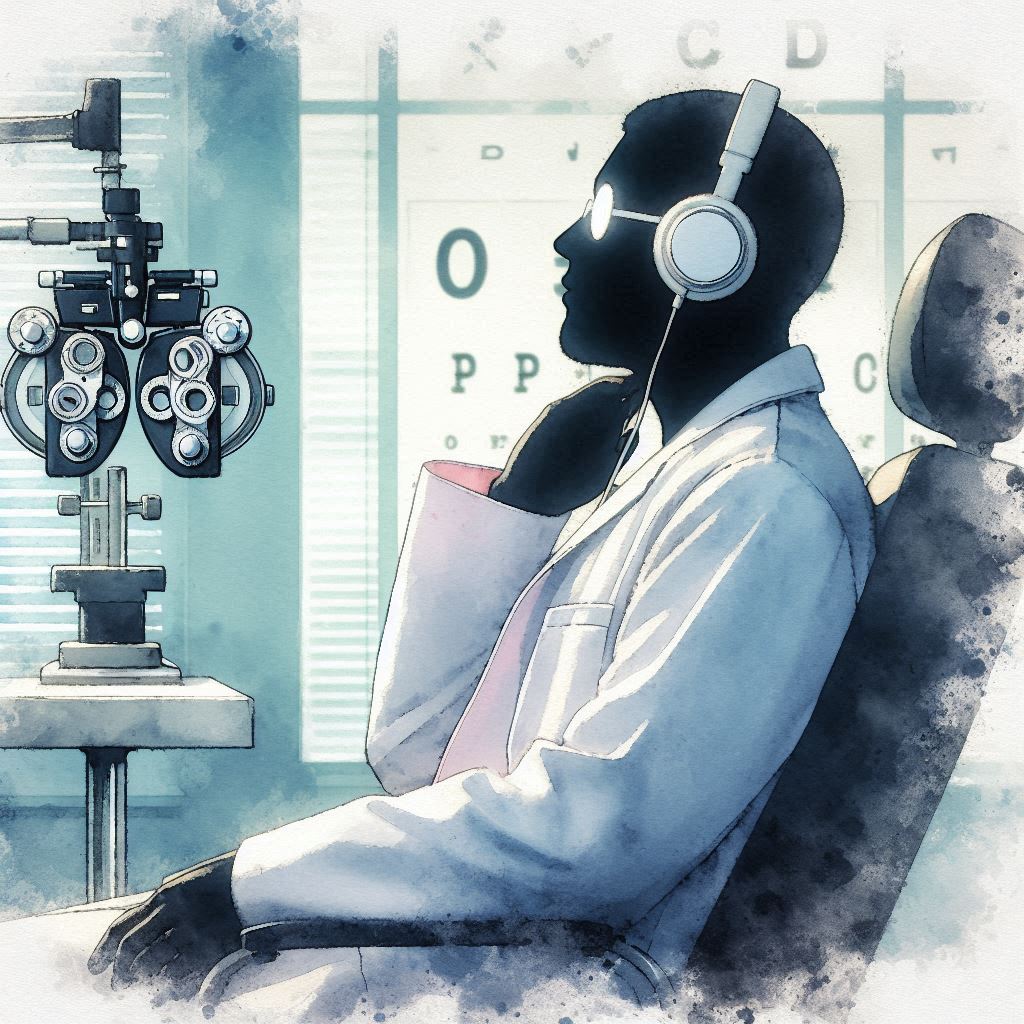
That’s right. After Hong Kong, after COVID and after the OSCE’s fiasco, I was now dealing with another setback. In Ontario, there are more vacancies for doctors than there are doctors so jobs were not hard to come by (yes the unadjusted wages are a reason for why there are so few doctors around). I got a job at a clinic that a friend recommended and I was happy with the set-up. I was booked to start working just a few days after my license got approved and when I came into the clinic on my first day…I was met with a completely empty schedule.
In all honesty, I was not shaken by this. I mean, I had just gone through the toughest part of my academic career and now, I was met with something that was not really in my control. Things could be much worse. During the strike, we were only allowed to see patients who were not covered by OHIP and that meant I got a very nice and gradual settling in period. Add this major event to the still ongoing COVID situation and what you get is that every day I would see around 3 or 4 patients only.
Also, since I was coming from a minimum wage income, earning more and working less was completely fine with me. Instead of working 8 hours in a clinic as staff, I was working a total of around 2 hours a day as a doctor and being paid pretty much the same.
During this time, I caught up on all the shows I’ve been meaning to watch. Saw all the movies I even had a remote interest in on Netflix and binged so much anime I lost track of it all. It felt weird to have free time. I had been in school for such a long period and now I had no more exams to cram for. There is no self-directed mandatory studying and now, I wasn’t sure what to do with my time. I mean, sure, optometrists in Ontario must complete a few dozen hours of continuing education lectures to stay in practice (mandatory by our college regulators) but that was honestly very easy to meet. If there’s no cramming anymore…what would you do with your time?
For me, I had an obvious answer. I had so many hobbies and any one of them would be picked up and improved upon. I could restart cello, I could do more breakdancing, I could do more singing and learn to produce music. I could do any and all of that. With no more exams, it was time for a renaissance of my hobbies.
I started breakdancing again and even played the cello every now and then. The singing stuff never really came back because as it turns out, my career as a singer sort of ended with my Waterloo days. Apart from that, I also spent more time with my girlfriend doing her hobbies, one of which was to boulder.
That’s a lot but the thing is, breakdancing, cello playing and bouldering, they were all still a part of extra-work hours. During work, I was still spending 2 hours in the office doing meaningful work and 6 just watching shows.
When the shows got boring, I would clean. I sweeped the floor, calibrated all the instruments and fixed all the broken things surrounding the clinic that needed fixing and then just did it all again and again. Of course there were certain things I couldn’t fix, like a broken calibration rod, or a cracked headpiece but that wasn’t that bothersome…or was it?
Seeing some imperfections in my clinic room every day for 6 hours a day eventually started to really bother me. Naturally, I went online to see how much it would cost to fix some of these small things and it was here that I came to see that even with my new higher salary, they cost a pretty penny. As a Canadian doctor, we’re in a particular spot. We get paid by the Canadian (or Ontario in my case) government a very reduced wage and yet we have to pay for American medical equipment fees (most of our equipment are made by or distributed by American companies). All of the tools are HIGHLY overpriced. If you think the American healthcare system is messed up, just know that it’s not just the consumers that it screws over, doctors get screwed over by it too. It seems like as long as you slap on “healthcare” to a product, you’re allowed to charge 3x as much.
I looked online for alternative solutions and it was then when I came upon a new hobby. 3D Printing.
The girlfriend and I had some friends who did engineering in university and who were savvy about 3D printing. With some guidance from them, I started a career in design. I designed a variety of different occluders for my clinic, then a calibration rod, then a few extra tools. Most of the things I designed would have cost me hundreds of USD and were 3D printed for pennies (not exaggerating). Beyond the clinic, I also challenged myself to do even more and designed a completely functional Catan game, various other board games and after that, upgrades for an electric cello that my grandma had bought for me a while ago that never really worked great. I was so happy with this new hobby I even started a Youtube Channel detailing my journey and how fun it was to learn a new craft.
At some point, my colleagues and friends from optometry school caught wind of what I was doing and asked if I was willing to sell some of my printed goods. From this idea, I created an instagram page for marketing as well as an Etsy page for selling. This occupied most of my time and honestly, if the strike didn’t happen, I likely would have never picked up this hobby.
There was joy in fixing things and as I found out how much I enjoyed doing this, I started to look for other things to fix. With this idea, I quickly came to find that there were two things in my life that still needed fixing. Both of which would prove to be more expensive and more time consuming than learning as simple as using a CAD program.
*Shameless self-promotion for all the things I mentioned :D*
https://www.instagram.com/2020._.hindsight/
https://www.etsy.com/shop/2020hindsightdesign/
https://www.youtube.com/@vivacello
Subscribe
Sign up to hear updates
 Memoirs of a tiger cub
Leave a comment