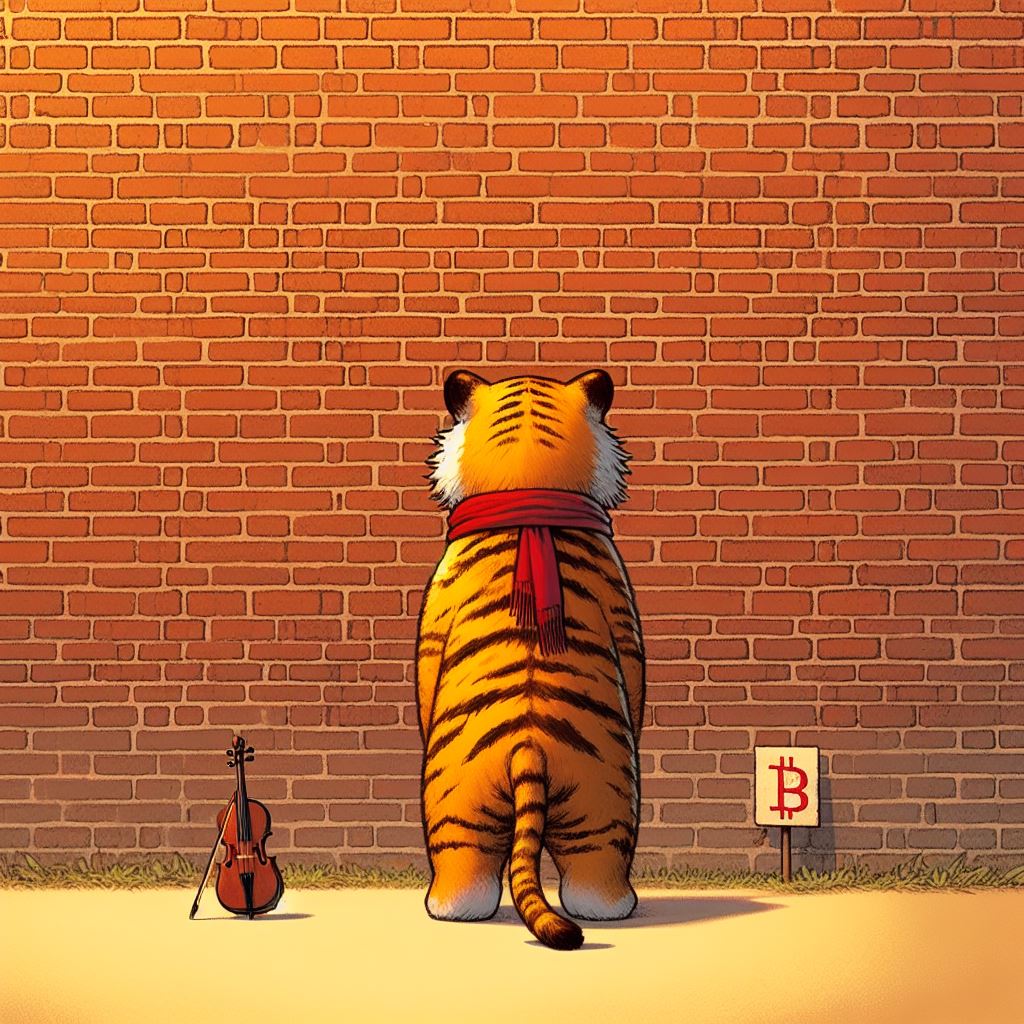

Time is a funny thing sometimes.
Yin and Yang
Chapter 150: Yin and Yang
In my darkest moments in school, I usually pulled through by gaming the system. When I was in undergrad and felt my GPA wasn’t strong enough for Optometry school, I padded it with music and arts classes. I had done the same thing in high school.
When things got hard, I didn’t double down and take the hardest path. Instead, I looked for workarounds. It sort of worked — but it also led to terrible imposter syndrome in Optometry school, and eventually, to mental breakdowns.
I saw this as a weakness. My thinking went: if I were really good, I’d just get better at the classes I was struggling in. I wouldn’t need to pad my record with easier ones.
Later in life, I realized I had been downplaying something important — I never gave up. Sure, it might have seemed sleazy, but knowing my limitations and working around them was a survival skill. If I couldn’t do it one way, I’d find another. There was always a search for an answer, and that counted for something. If anything, it wasn’t “gaming the system” — it was being realistic and practicing resilience.
The saying goes: a jack of all trades is a master of none, but oftentimes better than master of one. Life is too complicated to put everything into one pursuit. That can lead to tunnel vision, even obsession. Worse, it’s unsustainable to bet your whole life on just one thing. Life is too unpredictable not to diversify — just like a portfolio.
There was also a connection I had never made before. When things got tough in school, my instinct was to turn away from academics and run to my hobbies. But when the catastrophe hit my family, I couldn’t look away. I couldn’t run to my hobbies. These were opposing forces: on one hand, running from the problem to tackle it from another angle; on the other, a problem so overwhelming it refused to leave the spotlight.
That’s right. All those times I felt inadequate in school for padding my GPA with music courses while competing in a science setting — that wasn’t cheating the system. It was a workaround. Sometimes, especially in real life, tackling the problem from a different angle is the answer. It’s all about context.
In the real world, while dealing with crime, tragedy, and loss, this is more relevant than ever before. Unlike school, life doesn’t always have a clean endpoint. There is no “end of term” or “exam season.” Sometimes, it’s just an unending race. And if that’s the case, running away in order to cope isn’t weakness — it can be strength. It’s strength just to get up in the morning and keep moving forward.
Between being paralyzed in place and running away to cope, distract yourself, or find another approach — the latter are all valid forms of not giving up. The worst thing you can do is stand still, paralyzed, or surrender completely to the darkness. As long as you’re moving, you still have willpower, and that flame can burn through even the deepest shadows.
Time, it turns out, can reframe even your most shameful weaknesses into strengths. It’s a matter of perspective, context, and moderation.
Of course, the ability to look away still takes energy. It’s not neutralizing — it’s opposing. Redirecting focus requires effort. And sometimes it doesn’t work; your mind drags you back anyway. Still, at least for me, knowing this push-and-pull exists makes the problem tangible.
With those forces in my head, I decided to channel my energy into hobbies instead of the anger that kept bubbling up. Call it an intentional distraction. Even if it was “just a distraction,” it was still more productive than stewing in rage.
Naturally, since this incident had so much to do with my family — and my feelings toward them — I turned to writing. It’s what I had done before, and what my therapist encouraged me to keep doing.
I see writing the way I see 3D printing and design: infinitely malleable, adaptable to almost anything. A friend struggling? I’ll print a funny toy. A friend’s cat passes away? I’ll print a memorial plaque. 3D printing makes problems tangible — indirectly, through symbols and objects. Its infinite possibilities mean endless ways of creating distraction.
Writing is the same, but on a conceptual level. If 3D printing feels infinitely malleable, writing is fundamentally infinite.
When I got home after the scam call, I was furious. I didn’t know what to do with the anger, but I kept myself in check. Countless failures in the past meant I knew when I was about to spiral again. And if I couldn’t control the spiral, I could at least redirect it. I told myself I needed to channel that negative energy somewhere.
So I opened my laptop, pulled up the Word document that held all my past writings from school struggles, and began typing. I poured out my frustration — about the scam, about how cruel the world must be to allow degenerates like telemarketing scammers to roam free, and about my family and its messy dynamics.
At first, it was raw venting. But slowly, anger gave way to something else. I was still keeping the problem in the spotlight — but instead of drowning in rage, I was placing it somewhere. It was productive anger.
And soon, the distraction began to shift.
After a page of hate and trauma-dumping, I realized I still wasn’t done. So I kept writing.
And writing.
And writing.
One afternoon became a full day.
The act of writing started as complaining and venting, but slowly, comfort emerged in the act itself. When I ran out of things to say about the scam, reality began creeping back in. That’s when I realized I could keep writing to block it out a little longer.
I moved from finances to relationships. From relationships to history. From history to myself. Suddenly, I found an endless supply of material. Add my perspective and inner dialogue, and I had work that would keep me both busy and sane. I had found my distraction.
And maybe, just maybe, in writing and organizing my anger, I would also stumble upon an answer to calming the flames.
I had finally found a way to escape the present in a productive way. I escaped the now by diving into my past.
A week and a half passed.
By then, I had a journal detailing everything: the lives of my parents, every meaningful moment of my life, my history, my legacy, my inner demons. I wrote back further and further until the present felt like a bad dream. In that state, I worked through the history of my family and my very being.
And surprisingly, it helped — though not in the way I expected. As I wrote more and more about my life, I was reminded of all the things I used to be. My hobbies, my passions, my interests. I reflected on my whole self, not just “someone from a family who got scammed.” I redefined my identity and from there, stopped thinking so narrowly.
Writing your past gives you perspective. It shows you growth. It reminds you that you are more than your most recent tragedy. I never thought an autobiography — a biased, incomplete record of your own life — could be so self-actualizing. Writing, this practice I never trained for, became my salvation.
Good or bad, the quality didn’t matter. The act itself mattered. It brought me back to life.
When I finished writing my life story, I wasn’t done. I went back and edited my earliest journals, rewriting for clarity — sometimes just rewriting for the sake of writing. Only then was I more okay with reality.
And the best part? This “distraction” produced something tangible. When I was done, the entire journey was laid out in a story. My story.
Was I proud? Happy? Content? Not exactly. But I wasn’t ashamed either. And because I wasn’t ashamed, I came up with an idea: share it. Maybe my cathartic writing could help someone else. Maybe it could entertain, or at least help someone feel less alone after being targeted.
With that, I decided to post it all online.
And henceforth…
The blog was born.
I hope you’re getting something out of this. A feeling of not being alone. A little entertainment. Maybe even some perspective.
Subscribe
Sign up to hear updates
 Memoirs of a tiger cub
Leave a comment