The cost of harmony
Interest Fees
Chapter 51: Interest Fees
As third year was about to start, I quickly found myself in need of money.
The OAT wasn’t cheap, nor was the tuition for the extra term of schooling. I first thought about doing lifeguarding but then quickly realized that since the first year’s summer, I hadn’t renewed any of my licenses.
I probably could have asked mom for money but that just didn’t feel right. In the end, the girlfriend and I went on to our university’s LEADs website (the same website we used to volunteer for Welcome Week) and looked for positions around campus where we could work. These jobs were close to our lectures and our student residences so they acted as the perfect positions to hold as students in need of money.
I worked at the retail store/stationary store (exciting I know), and she had worked at a place called “campus bubble”. Our university branded bubble tea shop. They didn’t just sell bubble tea though, they also sold sushi and some other snacks. The thing with sushi? You can’t keep it. So when the sushi wouldn’t get sold, her manager would let her bring them home and we’d have it for dinner. It was a pretty nice deal and probably saved us hundreds of dollars in the terms to come. On my end, it was much less exciting. I occasionally brought misprinted products such as grid paper that’s been improperly printed or mugs with our University of Waterloo embossed strangely. It was still some savings but definitely not as much value as we got from day old sushi.
The savings between the girlfriend and I as well as our minimum wage income did save me from needing to ask my mom for money. Furthermore, because the places we were working at were on campus, the managers knew about exam week, midterms and were often sympathetic to adjusting our schedules to those periods of time. In other words, the jobs we held did not affect our studies or my applications for professional schools at all.
Everything seemed to fit right into place. I felt it this year more than any other year. I had found a good rhythm of being a university student. There was balance in study, work and love life. I was at peace.
There were some hard science courses but they were easy to get a handle on due the fact that the other courses I was taking were classical music courses. These music courses, which I have not stopped taking after the summer, proved to be not only really easy GPA boosters but also daily mood boosters. They made me feel better about my day and made cramming for science courses more bearable. Furthermore, they required almost no effort on my end since my musical foundation was more than enough. Looking back, it seems that my musical background would come back in university to give me an advantage I never even considered.
It was then that I came upon an idea of double majoring in music. I had already fallen in love with the idea of my schedule having even more music than I had already filled it with and this seemed like the natural progression to encourage this.
Furthermore, looking at the curriculum of the more advanced music courses I would be faced in the future, I wasn’t intimidated at all. The music theory and history they were teaching was very similar to the RCM tests I had done in the past. The most difficult parts of the courses were with regards to ear training, for which I had also already practiced for RCM and also some sight singing, for which I had perfected from time in the choir as well as being a member of the acapella groups on campus.
While some may think this was a waste of money, since I was just relearning things I had done with RCM. I didn’t think this way. This was for two reasons. The first was that this felt more like a victory lap where I got to rewrite all the previous experiences I had with classical music. Most of the tough parts of classical music in the past that I had to cram for were usually done with fear of disappointing my mom or CC. Now I was doing it for me because I wanted to. Sure, it helps that this time it was also rejuvenating since I already knew the material and was breezing through but that’s just a reward for all the toxic abuse I had in highschool.
The other reason is, while I wasn’t learning anything new, I wasn’t just being a braindead outcast in the class. What I remember from my music classes were conversations we had with the class. Unlike with RCM or the private lessons from before highschool, music in university was a conversation. Furthermore, tangents were not only expected but also encouraged.
RCM kept me on a schedule to get a grade and pass a test for a certificate. This was similar to my current relationship with the science courses I was taking. They were only done because I wanted to use the passing of a test to go on and do something else. In other words, they were means to an end. In music however, we weren’t being forced to memorize the lives of Bach or Mozart. I mean, there were tests on the final exam, but we were having discussions about them during lectures that often spread outside of just the curriculum. With RCM music theory and history, we pretty much just learned the 5 W’s of everything. Who, what, when, where and why. In music class, after a brief discussion on that, we talked about their influence and how the world changed with those pieces of music. Then, occasionally we would even branch further. Sometimes a small excerpt from a Bach piece would sound like a jazz chord or something we heard on the radio and you know what? We’d talk about it.
I was happy in that setting. Being a music nerd surrounded by other music nerds who are happy about a piece of knowledge only someone with a musical background could understand. It was amazing. One other thing that RCM almost never taught their students? Composing. Actually, RCM never taught anything creative at all. They treated music like a math class.
In one of the theory classes I took, we learned about analyzing pieces in sonata form, rondo form and ABCBA. After a brief chat about that, we went into talking about word painting, orchestration and music artistic decisions. Then, after talking about all that, we composed a piece in the class as a class. Music in university was truly about expression and discovery. They asked about your feelings on pieces and then questioned why you may think about that.
No matter when I look back on my time in university, the science courses I took always seemed to be a blur and the music courses I took always seemed to bring a smile on my face. It’s a beautiful thing to go into a higher education institution and learn about things you actually want to learn about.
This was why, after thinking it over briefly, I easily decided to double major in music in my third year.
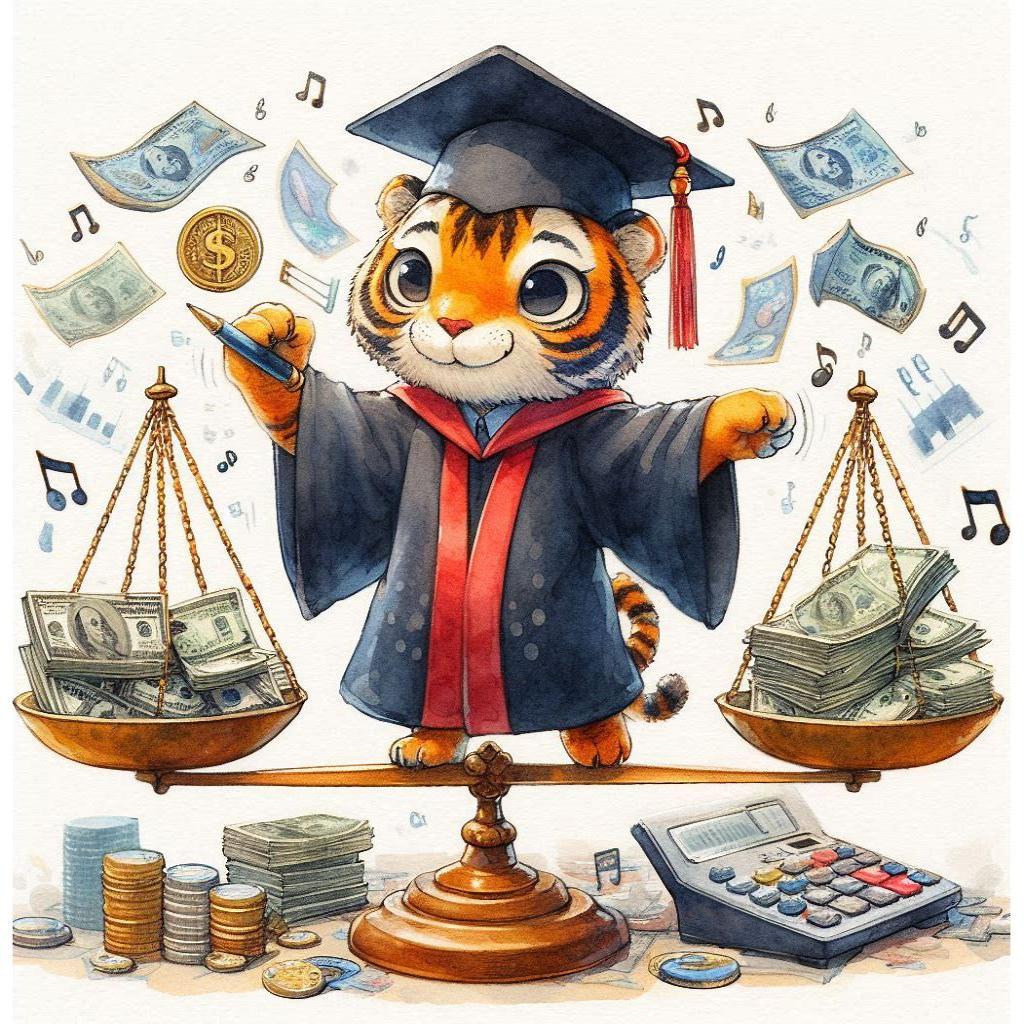
It wasn’t going to be cheap. I would need a few extra terms to fit in all the courses I would need for the second major. This meant that I would likely never get another free summer term until I graduate and furthermore, every term I was on campus I would definitely need to be working part time.
While I did mention that I was at a good balance between work and study, my love life, it was now time to push it to see just how sustainable that was. However, I also knew that I had to do it. Music, in university, was surprisingly just like it was in highschool. It was a fleeting experience. It was rare and it was special.
If I missed it, there was no way to get that back.
Subscribe
Sign up to hear updates
 Memoirs of a tiger cub
Leave a comment