Farewell Music…again…
Victory Lap
Chapter 58: Victory Lap
While I was saddened that I would basically never touch the cello again, I was happy that my future career was no longer uncertain. That said, I figured I would give classical music the best send off I could think of and I knew exactly how to do that too. It was through my graduation recital.
The graduation recital was an optional part of being a music major at Waterloo. If you focused on performance and did a lot of Music Studio, this was something you can host as an homage to all the musical growth you’ve acquired throughout the years. For myself, I definitely wanted to do it. My relationship with classical music had changed while I was in university. It’s gone from giving me hard times to helping through hard times. It elevated me in university that I still credit it for my success in getting into a career in the STEM field of my choosing. It had truly given me everything.
The courses I needed for science had already completed, I was simply just finishing up my second major in music at this point. So this meant that this summer, all I had to do was music. There was one music studio, for which I was going to be preparing for my grad recital with and one music theory course, which was once again, a one on one session with the music theory professor.
The grad recital’s repertoire would be a collection of pieces BB and I had worked on throughout my entire time at Waterloo. We weren’t learning any new pieces this term around, we were only going to be fine tuning some past pieces. This meant that I only had to perfect some pieces I already had quite a lot of knowledge on. What this also meant was that I had a lot more free time than I initially thought. Add this fact with the music theory course I was learning at my own pace and it meant that the term was mostly just chilling and only sometimes a bit of actual music.
The only other major responsibility this term was that I had to submit my “Intention to Graduate” form. When you wanted to graduate, you would go to the campus department that you belonged to and fill in the aforementioned form. The Intention to Graduate form is a checklist of all the science courses offered that were requirements needed to graduate with your degree. You would fill in the form and check off all the courses you took.
At the bottom of the page, there would be a line that said something along the lines of “minors you qualify for” and then some blank space. If you knew that you wanted to state in your degree that you minored in something, you would pencil in what “minor” you would want on your degree and then fill in the blank spaces with a list of courses that you did which belonged to the minor. In this section, I filled in “Joint Honors, Honors Music” and then proceeded to fill the entire thing to the brim with all the music courses I took.
When the form was completed, it would be submitted to the secretary of your department. Then it was off to administration. They would double check your transcript to make sure you hadn’t lied about any courses you took as well as to double check the requirements of any minors you wanted on your degree and whether or not you had the courses for those as well. After that, you would be basically done. That’s how I got my bachelors of science with joint honors music’s degree at least.
For some, this was a rite of passage. This was the final step before you were gone from the realm of academia. For me, it was anything but. Not only was I back for school next term, in this current term I had a finale of sorts for my undergrad lined up. It was a grad recital. When I submitted the form for graduation, I continued about my day without a second thought. I got stuff to do.
Anyhow, back to the music recital. I figured, since this was not a competition and this was not a requirement either, I would treat this as a simple chance for me to play some music as I wanted to. This doesn’t mean I was going to take it easy with the practicing. In fact, it was the opposite. I was going to try my best for this concert because it was my send off to music. A relatively empty schedule meant that I had the time to do it too. For this summer, I went back to the Kiwanis competition schedule where I would practice 3 hours a day. I figured I could do this one last time as a chance to relive a bit of my high school days. Despite my attempt at reliving my old highschool life days, it wasn’t quite the same.
I think the main thing was that I lost my edge. Despite practicing 3 hours a day, I never got into a mindset that everything had to be perfect. I mean, I did drill my techniques, but I didn’t do it with the intention that I had to be absolutely perfect in every aspect of intonation, tempo and dynamics. Perfection wasn’t what I was doing anymore. How could I demand that of my cello when the cello and I have grown to be friends. There was a lack of desire to be mechanical with my instrument. I wanted my songs to sing the way I wanted the piece to sound. I wanted something that pleased my ears, not something that replicated perfectly the instructions on the page.
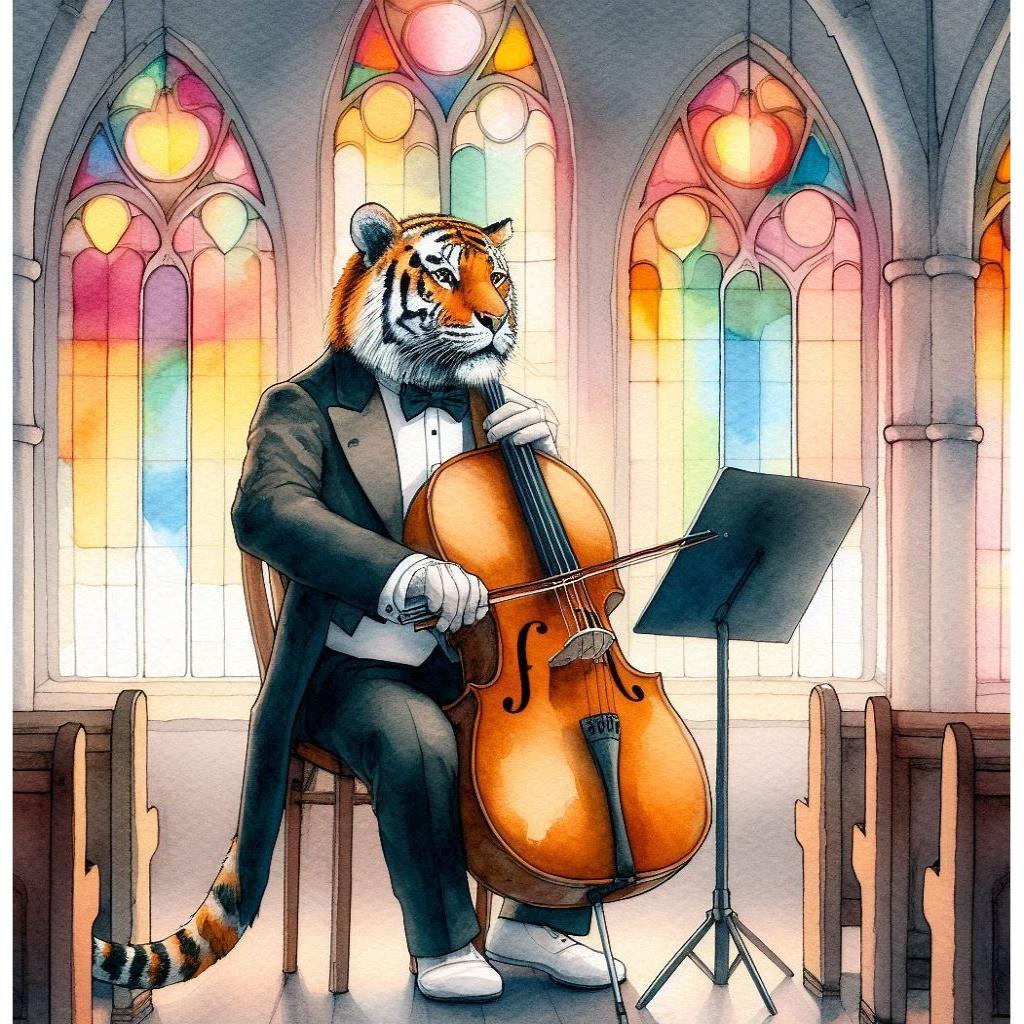
Regardless of how I felt, I had to put in the work. When the time came for my concert, I had all my pieces ready. A relatively small crowd showed up right away. It consisted of a few music students, my mom, and my maternal grandma who recently got her permanent resident card and moved back to Canada.
I hadn’t seen her since the summer with dad but I could tell that she had a bad time on the drive over. More yelling with mom I bet. That didn’t matter though. They were here for me. It was weird to see because I had never invited my mom to any of my performances nor had she shown any interest in coming to them. However, now, here they were. I blame the power of success from getting into optometry school for this now picturesque family dynamic.
A few minutes later, my girlfriend, who was there in the beginning but had gone to get me some water, returned. With her were LP and a few other friends who were available during the concert time slot. All in all, it was still an incredibly small crowd but a decent turn out for a summer term. I was okay with it, less audience means less nerves. Also, there were no stakes at play. I could have bombed and still passed my courses and receive my diploma. Playing for yourself does take a lot of the shakiness away.
It went well. My biggest concern was that I had practiced so much for my main piece, the cello solo sonata by Ligetti, that I actually got a blister on my thumb. Thumb position was often used in this piece and mine had been scarred a few days prior due to over practicing. It hurt but it wasn’t a deal breaker. I decided to just suck it up and put a bandage over all of it. My intonation may have been a bit off from this but it was still a passable performance if I do say so myself.
If you’re thinking about why I practiced the Ligetti so much, it’s because of what I said previously about the piece. This was the piece that I used to express all anguish and other negative emotions I had harbored from the previous toxic communities of music I was part of. The piece itself was a 20th century cello sonata with avant-garde themes. It isn’t your typical classical era classical music. It had dissonance and strange rhythms. It also had dynamics that ranged from the extremely loud to the extremely soft with very little time between the two. It was agitating and harsh at times but also had parts of clarity and peace. Some would say that 20th century classical music was when everything went wrong because it was when classical music started to feel like it was written by people doped out of their minds but I don’t think that’s fair.
I think in the 20th century we realized that sometimes we wanted to paint reality with realistic thinking. And realistic thinking is sometimes abrupt, chaotic and sporadic. Under that lens is how I viewed the Ligetti Sonata, it was a huge mix of emotion with power driving the piece forward. Very similar in parallel with how I thought about my experience with classical music in highschool.
It seemed appropriate that it was the highlight of my graduation recital. One final parallel I would make with the Ligetti and my past experiences was that I would be performing to an audience that consisted of my mom, someone who I would have attributed to a lot of the toxicity I endured during high school. Someone with whom I had a chaotic and sporadically rocky relationship. It seemed poetic.
During the Ligetti, the audience seemed like they had a good time. Or at least it seemed that way from the recordings. I was still performing with my eyes closed when it got serious because it took away the final bits of nerves from me. My mom didn’t seem to get it, she was raised on classical era music from Mozart and Beethoven and 20th century music seemed a bit weird to her. The music students who came liked it because the chaotic-ness was something that felt akin to a rush of emotion you’d get from a rock concert. My other friends watched and listened with politeness though to them, it seemed they were confused. I feel like at times, they may have thought that I was just performing a random set of notes angrily pounded on my instrument in madness.
There was one person who seemed to enjoy the Ligetti more than anyone else. She also moved with the music as if she was listening to my context of it more than the notes themselves. It was my grandma. For some weird reason, she really loved my Ligetti cello solo. When I finished it, she even got up to clap for me. After the performance, I took a picture with everyone there and celebrated the end of a major chapter of my life. Undergrad was over. I had gotten all wanted from it.
In the final moments of being in the chapel with all my teachers, my family and my friends, I turned to them and thanked them for all they’ve done for me. I meant it too. They seemed happy with my sentiment and responded with smiles and more applause.
The one who clapped the loudest as we drew the ceremonies to a close was grandma. She seemed like she was still cheering me on for how much she enjoyed the Ligetti. It stood out to me and made me think, “It’s strange that she would enjoy a piece like that”.
Regardless, I was glad that she liked it nonetheless. Especially because little did I know, this was the last time I would see grandma. She would pass away only a few weeks after my concert.
Subscribe
Sign up to hear updates
 Memoirs of a tiger cub
Leave a comment