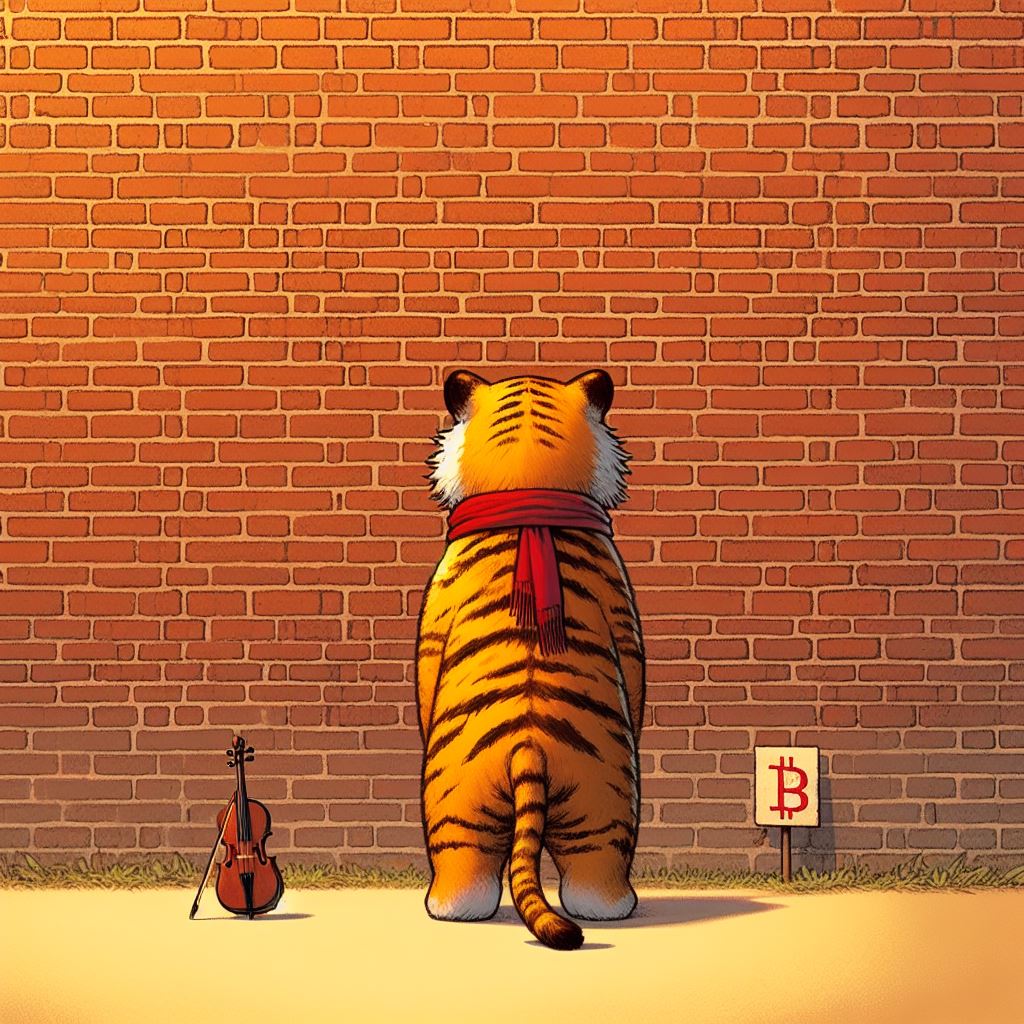

Denial comes in various problematic ways
Rocky Roads
Chapter 65: Rocky Roads
I found that for me to truly connect to people, I would have to have at least two things in common with them. Furthermore, that only occasionally worked. It’s better to have three common hobbies or more for my relationships to consistently work. In terms of expertise, my potential friend didn’t have to have that much. I really only needed them to have genuine interest in the hobbies for communication.
Now, I know how this sounds and believe me, I’m not stating this to be snobby. In fact, I see this as a character flaw and one I’m not proud of either. It’s just that boredom hits me very suddenly when there’s no common ground. I think a part of that was that I tend to see people through the lens of hobbies. Hobbies, being something people did for fun, really exacerbates their personalities. Genuine interest was fascinating for me when it was in something that fascinates me. My hobbies were a critical common ground I needed to communicate on a deeper level. Because of this, someone who didn’t fit at least a few of those hobbies didn’t really interest me that much.
On a much deeper level. I think the lack of interest in other people who didn’t have hobbies was because I wore the scars classical music had left me very proudly. That is to say, I was very proud of the journey I went on with classical music. Not only was it satisfying and gratifying, it was also a story of my overcoming toxic influences from my mom and CC, my surrogate father figure. I saw classical music as a scar that was conquered and it made me feel confident. But the thing was, this was a mental scar. It wasn’t a physical mark to see and point out. It was a scar that you’d see only if you really know about how toxic and beautiful classical music can be. I think this was the main thing that bothered me. If no one saw my scars, how could they possibly sympathize?
My classmates didn’t know my hobbies and how much importance they played in my life. They don’t know that my hobbies were much more than just a really fun thing I did or liked doing. They were also coping mechanisms and support networks. They were my shoulder to cry on and my faith towards my own will and resilience. I think for my class, hobbies were just something they did in their spare time.
Everyone else just seemed to have gone through their lives with very happy families. At least in my mind, most of them seemed to have come from fairytale backstories where there was no dad who stole and cheated or at least an unconditionally loving mother. This was hard to confirm because I never really spoke about my family but it was how it played out in my mind. With this narrative, people only did hobbies for fun. No one depended on them like I did. Therefore how could my class possibly get to know me if they didn’t take hobbies seriously at all? This was speculation of course. But at the time, I believed it.
That’s just the thing though. It was a thing I believed. In truth, I had no way of confirming any of this. Yes, I was isolated and yes, I did have a lot of uprooting of my support networks. However, I was definitely not the only one going through this. The reason why I kept thinking this way is that no one talked about anything. When in the Optometry program, rarely did conversation move outside of anything not related to school. My biggest regret when I was in first year optometry was that I was ignorant to the fact the optometry program was probably hard for everyone else too.
In fact, I’d say most of the discourse my class, the class of 2020, went through probably stemmed from our schooling and studies. It’s not that I was isolated because I was diverse in hobbies or had too many, it’s that I was isolated because everyone was. Everyone was so busy with school that no one had the time to talk about how hard the times were. In reality, I’m sure my class did have hobbies that I would have related to but unfortunately, we never got the time to really discover those connections.
I had given myself too much credit thinking that I had it worse because I was transitioning from a double major in music and science to a pure STEM major. I had assumed that STEM majors, like most of my classmates, had no hobbies by default. Therefore, I took it as a given that they would not have suffered much when they went from undergrad to optometry school. In my mind, they had smoothly gone from being a regular undergrad cramming all the time to an optometry student cramming all the time. Since it was something they were used to, they could easily fit in some hobbies but simply chose not to. This, of course, was definitely a false assumption. But one I was blind to until after I graduated.
In truth, it wasn’t really the lack of hobbies from my classmates which meant I had no common ground from anyone. It was mainly because our entire class was in a frustratingly tense situation with our studying and tests.
What I was actually experiencing was a denial of my expectations. I thought that being in the Optometry program meant I no longer had to try as hard on my tests and exams. This thinking was mainly fueled by the fact that I didn’t need a competitive GPA anymore, I just needed to pass. I thought I could take it easy. But I thought wrong.
Thinking it was supposed to be easy and finding out that it is actually hard made me go into a state of denial. Instead of simply accepting that the Optometry program was hard, I was looking for reasons why I wasn’t performing well. I first thought I was just not cut out for just being a STEM major. After that thought passed on, the blame train went on to the station. It must be because of my isolation! My isolation because I had too many hobbies and it was too hard to find friends like me! That must be it!
There were small strands of truth to all the stops the blame train had made. However, that’s all they were. Just strands. They were just blown up in scale because the mind was looking for any connection it could find. These tiny truths were just molehills made into mountains to act as scapegoats to the question I didn’t want to answer.
Why is this so hard?
My thinking was along the lines of:
“I used to pull all-nighters to get high grades! Now I was pulling them to simply pass. Unlike in undergrad, when you needed your GPA as high as possible, in Optometry, all you really needed to do was pass! The only grade you needed was over 60% in your classes then you’re golden. This should be easy seeing as I’ve never gotten below 65% in my entire academic career but I’m struggling. What’s wrong with me?”
In year 1 for Optometry, I think I must have pulled a good 3 all-nighters in fall term and a good 4 all-nighters in winter. It was simply taking me too long to understand the concepts from class and retain it. Then, when I did retain it, there was simply too much content to work through. This wasn’t viable for the future but I didn’t know how to fix it.
Aside from the fear of failing a class, these were concepts that I was supposed to understand to be a good doctor in the future. It wasn’t all about grades, it was about preparation for your career. I had a problem but didn’t want to admit it. I didn’t want to admit that maybe…
I wasn’t cut out for this program for which I had tried so hard to get into.
It was a disconnect in my psyche. The course load was brutal and the content we were learning was enormous. I was struggling from schoolwork exacerbated by social isolation. I was not struggling directly because of the social isolation changes and a lack of my support systems. That was fuel to the fire, not the initial firestarter. Yet I blamed the lack of hobbies and my classmates not having any.
Denial was simply where my brain went to seek answers to an expectation completely shot down. Instead of accepting that my capabilities of cramming for school were nearing the maximum output, I chose to cope with blaming other things to get by.
If you’ve ever been in this situation before, I feel for you. It’s tough. It’s also incredibly hard to get off the train even when you know what’s going on. That was the case for me, I couldn’t get off. This made things worse as, given just a little bit of time, I quickly found myself riding the blame train all the way to every avenue of my life.
In other words, I brought my problems home with me.
Subscribe
Sign up to hear updates
 Memoirs of a tiger cub
Leave a comment